Common scams in the crypto sector
| 04 Feb 2026 |
Cryptocurrencies offer significant convenience when working with funds, as we have already mentioned, and as speculatively utopian as it may sound, they provide a more complete idea of the future of the financial world. Nowadays, they are certainly an unavoidable factor, and even those who are more skeptical about them cannot deny the positives that digital assets bring.
But it is only natural that when something is so popular, it cannot remain untainted. This is where fraudsters, dishonest, unscrupulous people, or even schemers come in, whose entire effort is focused on getting their hands on your money, and without you even realizing it, the biggest tool against this is you yourself. In this case, we are not even talking about financing terrorism, transactions on the so-called "dark web" or money laundering - these fall under a different category of cryptocurrency crimes. Rather, we are focusing on small, private cases in which you may be misled with a small amount of money for you, but you are one of thousands, which in turn accumulates a fairly large amount in the pocket of the person who has gained your trust.
Here are a few examples to watch out for and be attenative about!
Investment scams
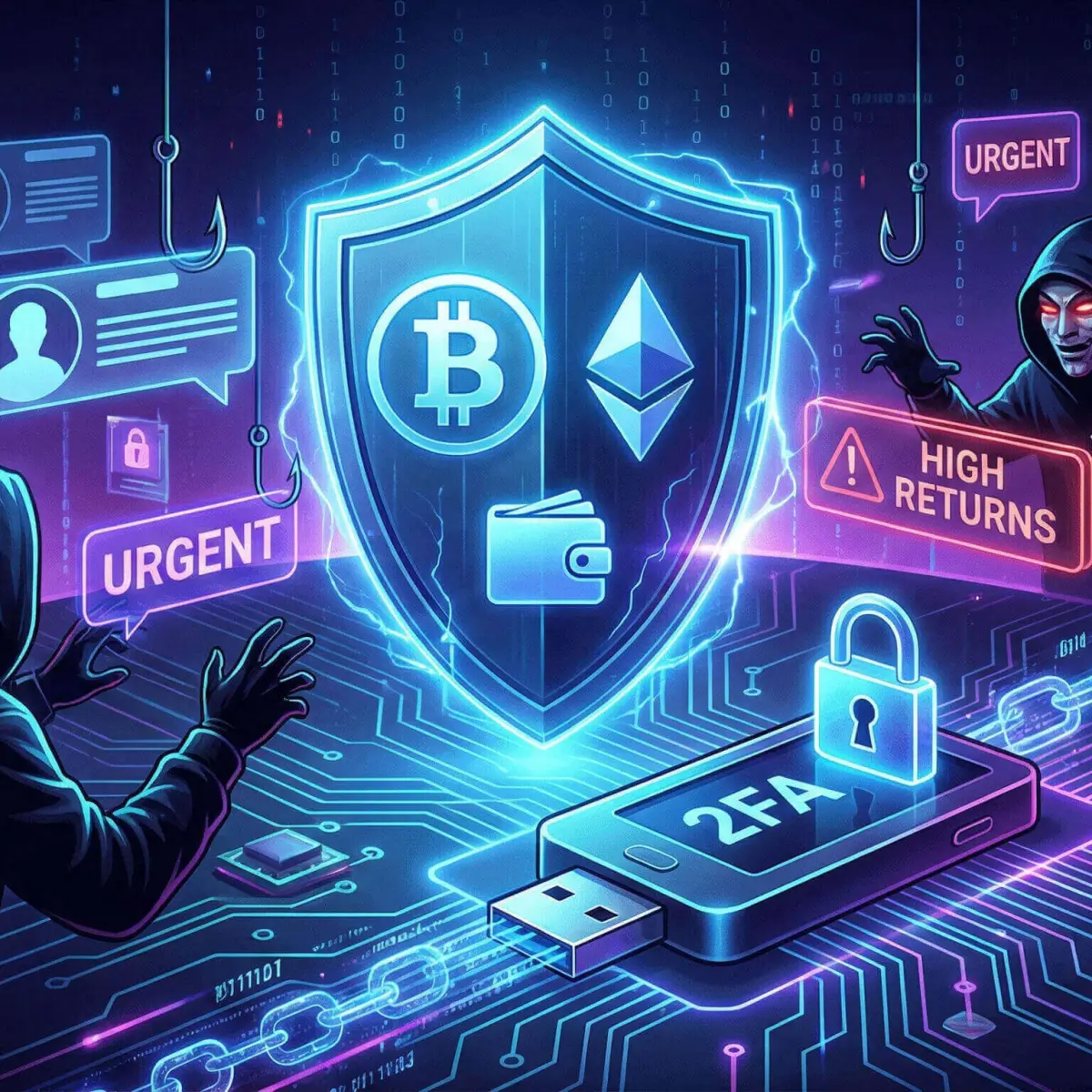
You come across an attractive advertisement on social media: "Invest only $150 and get 400% more back." As tempting as it may seem to register on this site and provide certain personal data in order to make easy money, this is definitely a scam. In the world of cryptocurrencies, no one can guarantee you such a return because no one can predict how things will develop. Let's imagine that you get in touch with the company in question, which looks good - it has a website, social media accounts, a beautiful logo, and everything necessary to gain our trust and lure us in. However, at some point, it becomes clear that these people will disappear once they have gathered enough capital. Then you will not be able to find either the website or your money.
If you have fallen into this trap and invested $150, and after a week you have received 400% on top of your initial investment, keep in mind that this 400% will be someone else's money, and you, lured by the profit, will want to invest additional funds. This type of temporary return to the "victims" of the scam is a common occurrence. In this case, the scammers actually send money back and act completely legitimately. But the amount of money sent always gets bigger and bigger, and the platform operates until its creators have collected enough capital and disappear.
Investing in new projects is also quite tempting, based on certain digital assets that triple in value overnight. However, let's not kid ourselves - this is the most appealing idea that catches innocent people - that they will significantly increase their money. Let's imagine that a new crypto project or a new NFT, a new token, appears.
The scammers have created it with one specific goal in mind, the so-called "pump." This means that many people are recruited to "pump" resources into the new, supposedly promising project. In principle, this is true – the more resources a crypto project has, the more legitimate it is. In principle, the more resources a crypto project has, the more legitimate it is. But in the end, the scammers disappear with all the funds, and the crypto project is worth... $0. A similar case is that of the Squid Game token, which was created precisely to capitalize on the massive fame of the Netflix series of the same name, which has become a global phenomenon in terms of popularity. It is clear what is happening with this token at the moment... Or rather, what is not happening.
The love scam
Perhaps one of the most bitter scams in the world of cryptocurrencies, and in the internet space in general, because in addition to stealing money, it also steals the physical time invested in another person, as well as playing with people's feelings and emotions. Through dating sites, apps, and social networks, the victim of this type of scam is lured into a love affair with a person who, in almost all cases, is abroad. Communication begins, the victim is manipulated, and even falls in love. The goal is to make you unable to imagine the world without this person in it (whom you have never seen in person), the main trick being to make you willing to do anything. And no matter how much we say to ourselves, "How can people fall for this?", the love scheme, known in English as the "pig butchering scheme", works perfectly. You communicate with a person for months, sharing everything about your daily life, until suddenly something unforeseen happens to them, requiring you to send them $900, which, of course, they will return after some time, when they stabilize from the problems surrounding them. Of course, that's when the person disappears and never reappears in your life.
There are even those who go as far as making wedding plans or plans to live together. Practice shows that older people are more likely to be involved in this, who for one reason or another are lonely and need attention. Their task is to send money to the person in question so that they can buy a plane ticket and come to live with them in Bulgaria. Let's put it this way: it is strange that a woman from Miami, with the American standard of living, cannot afford to issue a marriage certificate, after which she can come to Bulgaria, marry a stranger, and live together in his house in Svishtov. It is also strange that the document costs thousands of dollars, which, instead of being wasted, the person in question could give to their children or spend in another meaningful way.
Love scams have another element – a woman was "captured" on the internet by people posing as military personnel. They are supposedly working on a UN mission in Tanzania. Love is strong, but there is one barrier. The soldiers in question want to be sent bitcoins or another type of cryptocurrency so that they can go on leave, buy a plane ticket, and come to Bulgaria to see their love, more accurately called their victim. This is a very insidious scheme because it gives people false hope and feeds them with feelings of false love. The problem is that many of them probably do not share how they have wasted so much money because they feel ashamed. And the person who has deceived them, of course, disappears and there is no further contact with them.
Phishing scams
This brings us to the so-called "phishing scams," which come from "fishing." They work literally in this way. Thousands of emails are sent out, hoping to "catch" a few, similar to casting a fishing rod into a river. In this case, these emails contain a link that somehow entices the victim to open it and share important information inside—login details, for example, for their real wallet. You may even receive an email that looks exactly like those sent by the operator responsible for your crypto platform, stating that certain policies are changing and you need to log in to your account to accept them.
Under no circumstances should you do this via email. If this is true, you can log in through the official website, not an alternative one. Never open (click) links from emails, strange Facebook, Instagram, X (formerly Twitter) profiles, etc. Always be careful and keep your wits about you in public places. If the internet network is not secure and there is no password, then ask yourself, "Should I log into my wallet and enter my login details right now?" Public networks pose a great risk because they are accessible to everyone, are not secure, and anyone who uses them is a potential victim. Free Wi-Fi sometimes comes at a price.
In addition, to mention social networks again, you should not trust any profiles that give away some kind of cryptocurrency for free in exchange for registering in their application. There is a well-known and relevant phrase that says: remember that when something like this is offered for free, you are the price. Your data is what scammers are after. It is entirely possible that not only will your data be compromised. For example, they may request a payment from your bank to verify that the information you have provided is correct, and only then will you be able to receive your free cryptocurrency.
Finally, we would also like to note that it is absolutely essential to use only reliable wallets. Do your research. Do not register or transfer your cryptocurrency to a wallet that you have doubts about. Check out other users' comments and the number of downloads (if it's an app from Google Play or the Apple Store). Stick with proven and popular providers of such services. Turn to experienced professionals, such as our team.
Do not forget - this is your money. Funds that you can use to go on vacation, help your children or a loved one, save, or invest in something meaningful. Funds that you have fought for, earned, and won with difficulty, and paid taxes on.
Don't be naive!
In conclusion, here is a useful Link and note that if you suspect fraud or have been a victim of such, you can contact the Cybercrime Directorate of the General Directorate for Combating Organized Crime directly using the contact details provided in the link.




Log in Register Quick ask?